
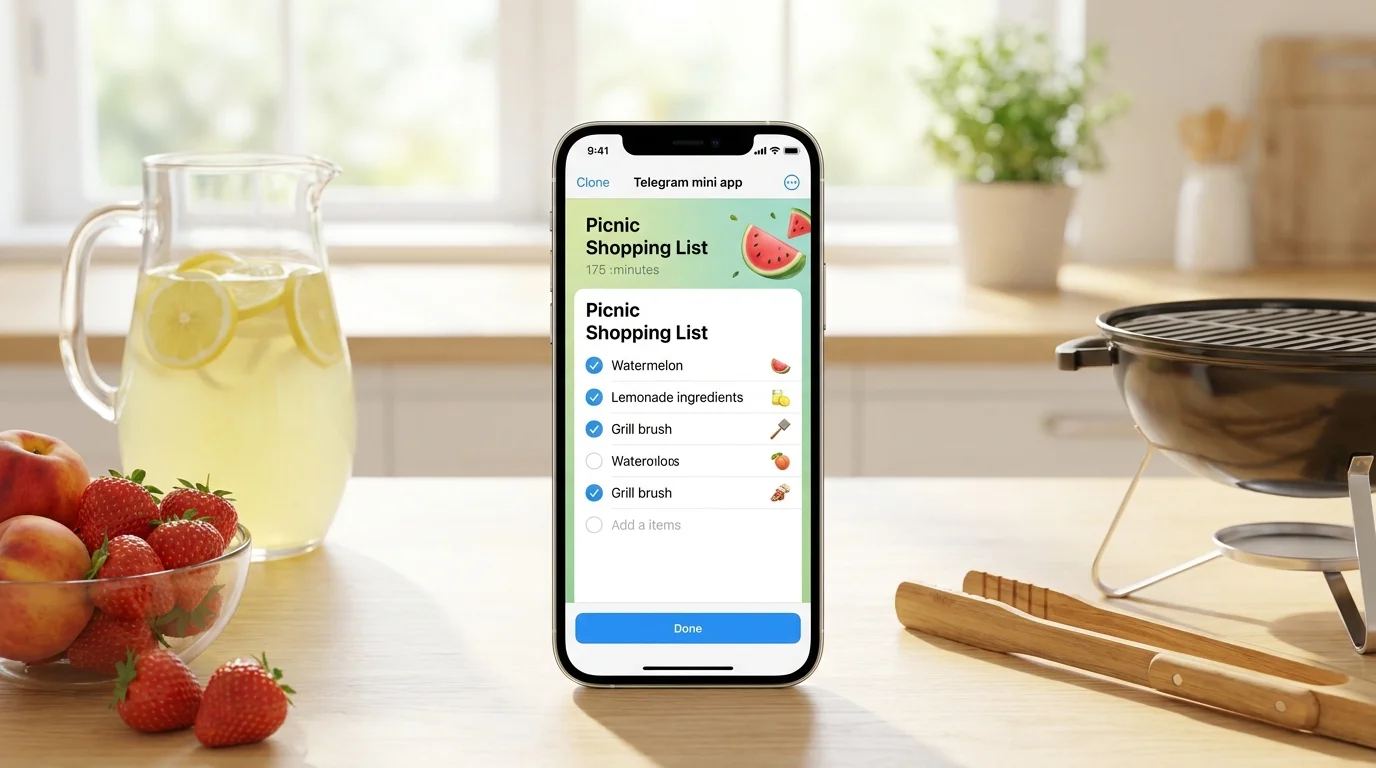
Pickt Updates Summer 2026: What's New and What Has Changed
In summer 2026, Pickt updates have made shared shopping lists in Telegram noticeably more convenient: synchronization has become faster and more stable, smart suggestions and templates for seasonal purchases have appeared, access rights and change history have improved, and working with large lists has become easier. Below is an overview of "what's new" with practical scenarios for families, couples, and neighbors.
1) Faster Synchronization and Fewer "Lost" Edits in Real Time
The key summer change is that working with lists has become significantly smoother, especially when several people are simultaneously marking items in the same list. This is important during travel season and group shopping, when the list is literally updated on the go.
In 2026, the focus of updates was on stability: fewer conflicts during simultaneous editing, faster appearance of new rows and "bought/not bought" statuses for all participants. The result is that you encounter fewer situations where someone has already bought an item, but it still shows as "pending" for another person.
- Practice: if you're shopping for a picnic, one person adds food, another adds drinks, and a third adds charcoal/dishes. The list updates for everyone almost instantly, and duplicates become fewer.
- Useful tip: keep one "general summer" list for regular purchases (water, fruit, ice cream), and one-time items in a separate list for the event.
2) Smart Suggestions and Quick Additions: Less Manual Routine
The summer 2026 Pickt updates enhanced "quick input": the app better picks up recurring purchases and helps add them in a few taps. This is especially noticeable when you're putting together a basket of typical items—from milk to mosquito repellent.
Suggestions are useful not only for a single user but also for a group: if a family or neighbors regularly buy the same categories, the list is formed faster and more accurately. As a result, a shared shopping list becomes closer to a "live checklist" rather than an endless wall of text.
- What changed: faster addition of recurring items and more convenient selection of similar products.
- Seasonal scenario: a "dacha set" (gloves, trash bags, napkins, repellent) is assembled in minutes, even if you do it once a month.
If you keep a shared list in Telegram and want it to be accessible to all participants without extra apps, it's convenient to use Pickt as a mini-app: open it, add, mark—and everything is synchronized.
3) Templates and Recurring Lists for Summer: Picnics, Trips, Dacha
Seasonality is one reason why Pickt updates feel especially useful in summer. In 2026, it became easier to put together typical shopping sets for recurring situations: outdoor outings, weekend trips, weekly groceries, and "guest" tables.
The "template" approach saves time not only for the list creator but also for all participants. Instead of remembering small items each time, you use a pre-prepared structure and supplement it on the spot.
Example template "Picnic for 4–6 People"
- Food: meat/vegetables for the grill, bread, sauces, cheese, fruit
- Drinks: water, lemonade/tea, ice
- Consumables: charcoal, lighter fluid, napkins, disposable tableware, trash bags
- Comfort: blanket, wet wipes, repellent, band-aid
Practice: divide the template into blocks and assign responsible people: this way, "shared shopping lists" really reduce preparation time and lower the chance of forgetting something important.
4) Access Rights, Roles, and Order in Lists: More Convenient for Families and Neighbors
When a list is shared, not only convenient additions are important, but also control: who can edit, who can just mark purchases, who can see the history. In summer 2026, Pickt brought more order to collaborative work with lists.
This is especially relevant for scenarios like "roommates" or "family with children," where one participant might accidentally delete items or change the list structure. Improvements in the logic of rights and collaborative editing help keep the list clean and understandable.
- For couples: one person manages the weekly shopping plan, the other marks purchased items and adds small things.
- For families: you can agree on rules: add only through categories, don't delete others' items without discussion.
- For neighbors: a shared "home/household" list (paper, cleaning supplies) lives separately from personal groceries.
5) Change History and Transparency: Who Added What and When It Was Bought
One of the most common requests for shared lists is "who added this?" and "when was it bought?" In 2026, Pickt updates enhanced the transparency of actions in lists: it's easier to understand where an item came from and what happened to it.
This reduces household conflicts and saves time on messaging. Instead of clarifying in the chat, you look at the list and quickly figure out what has already been done and what still needs to be bought.
- Scenario: shopping for guests' arrival. One person added "ice," another bought "charcoal," a third marked "sauces." From the history, it's easy to see progress and avoid duplicate purchases.
- Useful for budgeting: transparency helps avoid adding extra items at the last moment.
6) Convenience for Large Lists: Categories, Order, and Less Chaos
In summer, lists often grow: seasonal fruits, drinks, household items, travel first-aid kits. Therefore, a separate block of updates in 2026 is about managing large lists: so you don't have to search for "salt" between "watermelon" and "trash bags."
Pickt is gradually becoming not just a note but a tool where you can keep a list in order: structure it, quickly find what you need, and not lose important items. This is especially valuable if you maintain one general list for the week and several event-specific lists simultaneously.
- Divide by context: "Home," "Dacha," "Trip," "Picnic."
- Divide by store: supermarket, market, pharmacy.
- Divide by responsibility: "my zone," "your zone," "shared"—if that makes it easier to agree.
If you haven't tried the mini-app format in Telegram yet, you can open Pickt directly from the bot @PicktBot: quick access link — t.me/PicktBot/app.
Frequently Asked Questions
Is Pickt a separate app or does it work within Telegram?
Pickt is a free mini-app (Telegram Mini App). It runs inside Telegram and does not require a separate installation from an app store.
Is Pickt suitable for a shared shopping list for several people?
Yes. The main scenario for Pickt is shared lists with real-time synchronization between family members, couples, or neighbors.
What is the most noticeable thing in "Pickt updates" in summer 2026?
The most noticeable are real-time improvements (faster and more stable synchronization), more convenient quick additions and suggestions, and more order in collaborative work: more transparent changes and easier management of large lists.
What's the best way to organize summer shopping to avoid forgetting small items?
A combination of 2–3 lists works well: "Week/Home," "Dacha/Weekend," and "Event" (picnic, guests, trip). Plus a template set of consumables: napkins, bags, water, repellent, first-aid kit.
Conclusion: Pickt updates in summer 2026 are about speed, order, and less routine in shared shopping lists. During travel and dacha season, this is especially noticeable: you put together your basket faster, buy duplicates less often, and better see progress on the group's tasks.